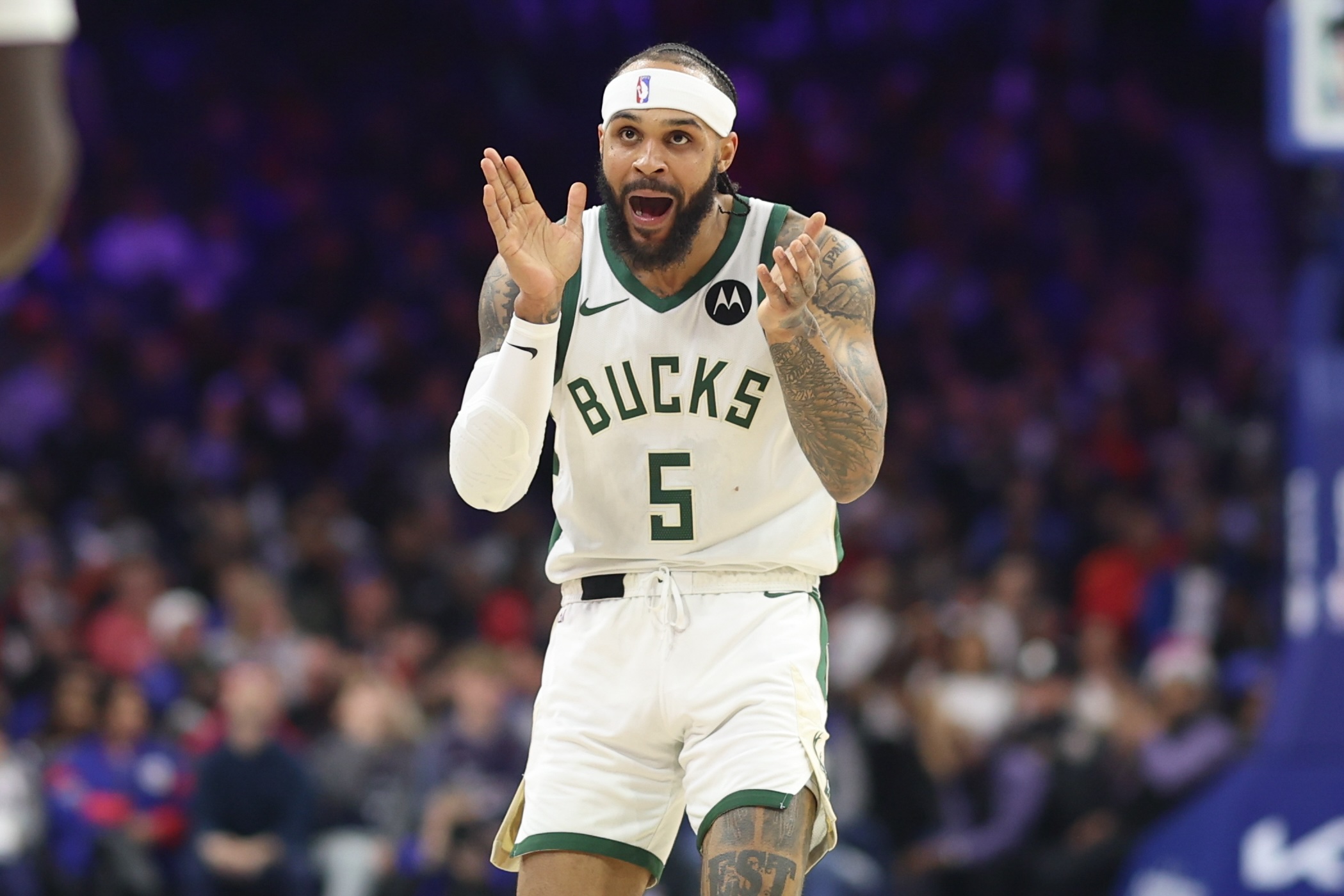
The NBA is taking a closer look at the Milwaukee Bucks and Gary Trent Jr.’s four-year, $64 million contract.
The league has formally launched an investigation into whether the Bucks and Trent circumvented NBA salary-cap rules when they agreed to the deal this offseason, according to The Athletic’s Joe Vardon. The NBA has hired investigations law firm Hecker Fink to conduct the probe.
The investigation centers on the possibility that Milwaukee and Trent had a prior agreement in place that would have Trent accept below-market contracts in previous seasons before receiving a much larger payday once he accumulated the necessary Bird rights.
That distinction is important because NBA rules prohibit teams and players from making advance agreements designed to circumvent salary-cap restrictions.
What Happened?
Trent originally joined Milwaukee in 2024 on a veteran-minimum contract.
He then signed another two-year deal with the Bucks before the 2025-26 season. Trent earned approximately $3.7 million last season before opting out of his player option and becoming a free agent.
That move allowed him to enter the offseason with Early Bird rights, giving Milwaukee the ability to exceed the salary cap to re-sign him.
The Bucks ultimately gave Trent a four-year, $64 million contract that will pay him an average of more than $15 million per season.
The timing and size of that jump have prompted questions around the league.
Trent averaged 8.1 points per game during the 2025-26 regular season, his lowest scoring average since his rookie season. He did, however, have a notable 2025 playoff run, averaging 18.8 points per game while shooting 50% from three-point range over five games.
The Question the NBA Is Trying to Answer
The league isn’t simply investigating whether Trent’s new contract was large.
The central question is whether Milwaukee and Trent agreed beforehand that he would take smaller contracts in 2024 and 2025 with the understanding that the Bucks would eventually reward him with a much larger contract.
If investigators determine that such an arrangement existed, it could constitute salary-cap circumvention.
The Bucks and Trent’s representation are cooperating with the investigation, according to reporting cited by The Athletic. Both sides have declined to comment publicly on the probe.
Why the Joe Smith Case Matters
The investigation also brings back memories of one of the NBA’s most infamous salary-cap cases.
In 2000, the Minnesota Timberwolves were punished after the league determined that the team had an illegal agreement with Joe Smith involving a series of contracts that ultimately were supposed to lead to a larger deal after Smith obtained his Bird rights.
The NBA has not voided a contract for salary-cap circumvention since that case.
The Bucks investigation is also arriving shortly after the league concluded its investigation into the Los Angeles Clippers and Kawhi Leonard.
The Clippers were found to have violated salary-cap circumvention rules involving off-court income opportunities for Leonard. The NBA punished Los Angeles by taking away five future first-round picks and imposing significant fines and suspensions.
However, the Clippers case and the Bucks investigation involve different alleged mechanisms. The Clippers investigation involved outside endorsement opportunities, while the Trent case centers on the possibility of a prior agreement involving future compensation through NBA contracts.
For now, the NBA has not announced any finding of wrongdoing by Milwaukee or Trent.
The investigation remains ongoing.